
Boone County Civil Docket Searches
Boone civil cases run on Nebraska's JUSTICE case-management system. The public search starts at the Nebraska Judicial Branch case-information page. There you narrow results with the Boone County and court-type filters. Search by a party name. A witness name will not get you there. The preview also splits entries into Individual and Entity. So a business name needs the right category rather than the person field.
Figure out first whether the case sits in Boone County Court or Boone District Court. Year, case type, subtype, judge, and attorney filters are worth adding only when the first result comes back too broad. A JUSTICE result can include a case summary and a public Register of Actions. It is not a certified copy. Nor is the online detail screen a complete document file.
- Open the state case-information route and select the official JUSTICE search option.
- Enter the plaintiff, defendant, petitioner, or respondent name in the court-record spelling.
- Choose Boone County and then narrow by County Court or District Court when the matter is known.
- Confirm the case number, filing date, subtype, and court before opening the Register of Actions.
- Ask the Boone court clerk for the named document or certified copy if the register points to a filing that is needed.
Boone Civil Court Limits
Current state materials put Boone County Court's concurrent civil jurisdiction at $70,000. Small-claims jurisdiction sits at $7,500, effective July 1, 2025. Knowing those figures explains why any Boone civil search needs a court-type check. They are jurisdiction limits, nothing more. Not average claim values, and not a shortcut for sorting every matter into its court. The filed court decides the actual docket route. So do the case subtype, the relief requested, and any transfer order.
Current source check: Boone County’s older local page still uses $52,000 and $3,500 language. Use the current state materials for a civil docket decision.
The Judicial Branch’s June 2025 notice documents the effective-date change.
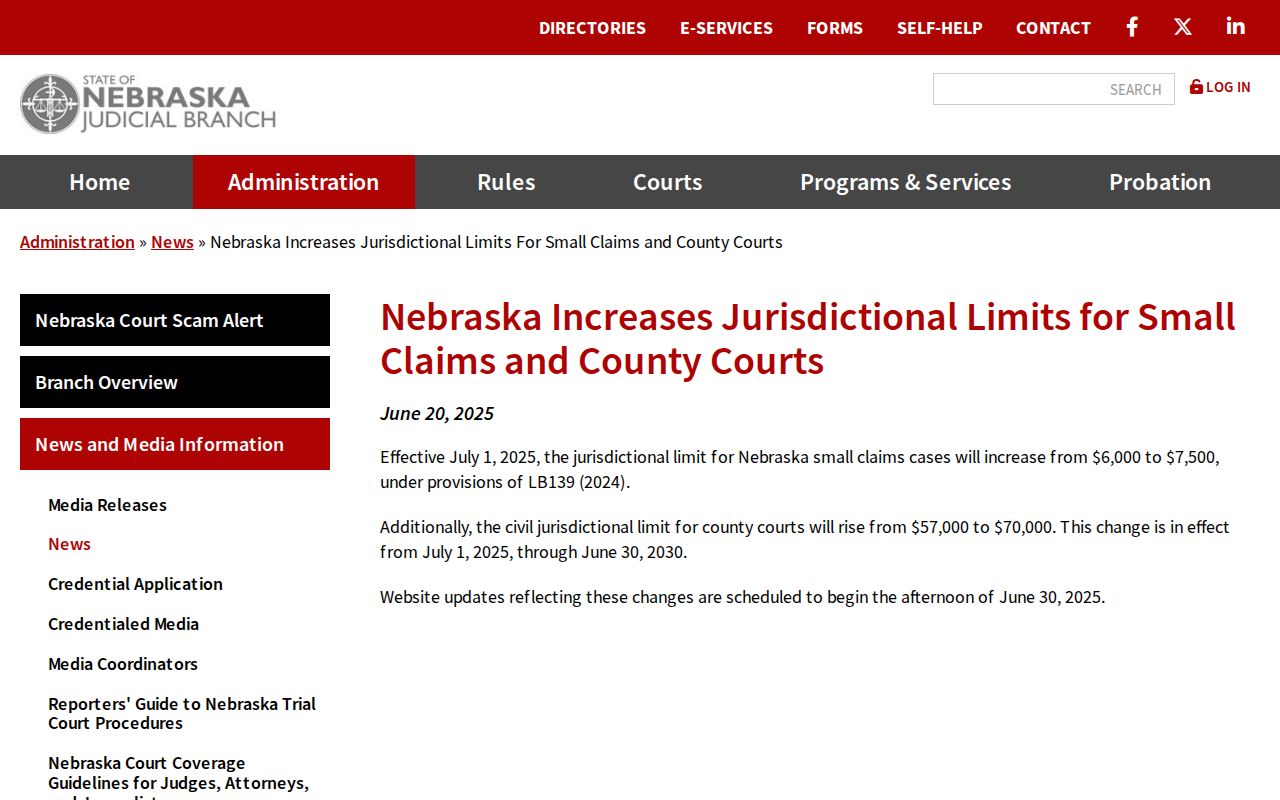
Trust the state notice over the older local threshold description. That older text is a source conflict, not a rule for today.
Civil Dockets: What They Show
A Boone civil case summary can list its court, county, number, filing date, type, subtype, judge, caption roles, and a result if one has been entered. The Register of Actions sits behind that summary. It shows the complaint or petition, summons and return, answer, motions, affidavits, service events when docketed, hearings, orders, the judgment or decree, and later satisfaction or execution activity. The list runs in chronological order. Whether you can view a particular document's image is a separate public-access question.
| Case summary | Boone court, case number, filing date, case type and subtype, judge, caption roles, and outcome if entered. |
|---|---|
| Starting papers | Complaint or petition, filing event, summons, and return or service entry. |
| Case activity | Answer, motion, affidavit, hearing, conference, order, trial, or decision as shown on the register. |
| Judgment trail | Judgment or decree, financial entries, satisfaction, execution, garnishment, or appeal when docketed. |
| Document access | Available public image links may exist, while redacted, restricted, missing, or unconverted papers require clerk direction. |
An entry saying a motion was filed does not reproduce the motion's text. A case summary and a document file are two different court products, related but never interchangeable.
Boone Civil Court-Type Filter
The JUSTICE court-type filter earns its keep here. County Court and District Court split the civil work. Boone County Court takes civil matters within the current limit. It also takes small claims, probate, guardianship, conservatorship, adoption, and city or village ordinance prosecutions. Boone District Court is the general-jurisdiction civil court. It handles major civil matters, equity, domestic relations, and many appeals from the lower court.
| Boone court | Civil docket examples | Search step |
|---|---|---|
| County Court | Ordinary civil, small claims, probate, guardianship, conservatorship, adoption, and ordinance matters | Use County Court and confirm subtype |
| District Court | General civil, equity, domestic relations, and transferred or appealed matters | Use District Court and confirm subtype |
Neb. Rev. Stat. §24-517 describes county-court subject-matter authority, including probate and municipal-ordinance matters.
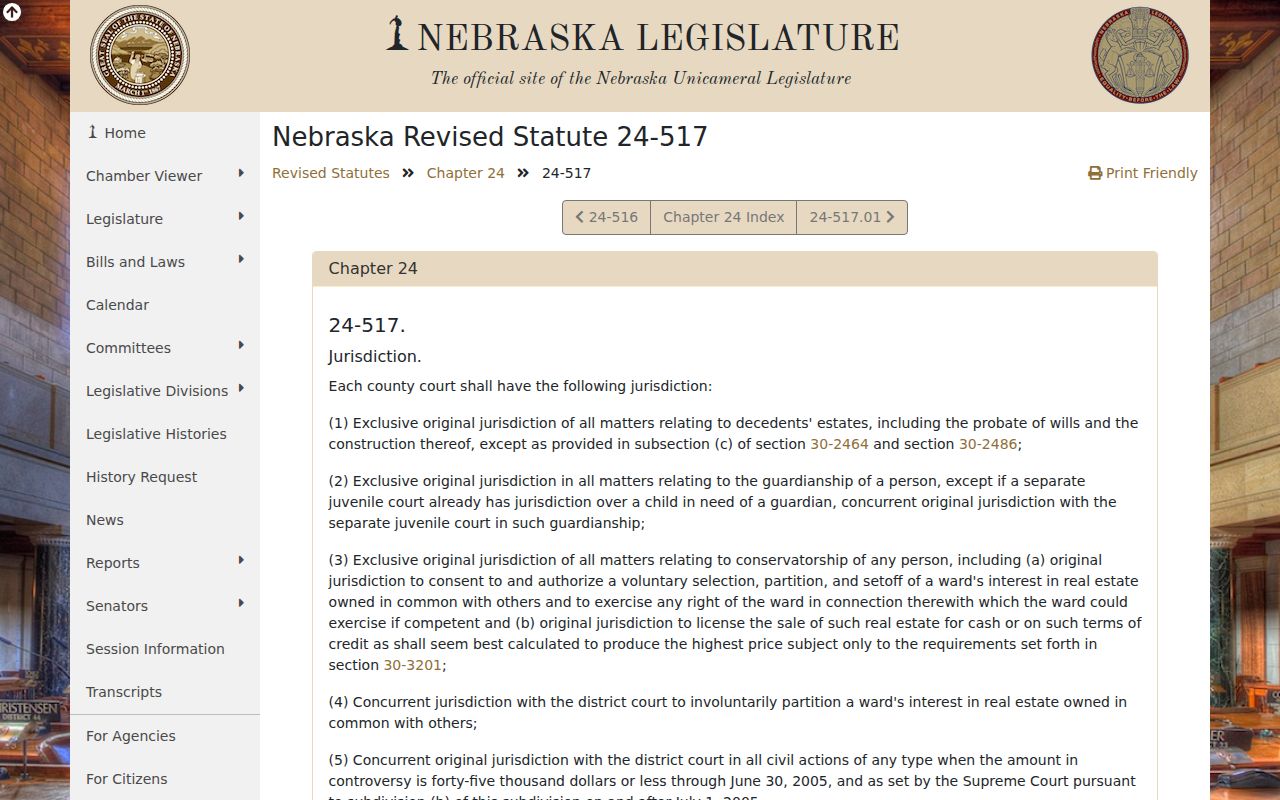
Jurisdiction figures help route a Boone civil lookup. Only the filed court and case subtype identify the docket that actually holds the matter.
What Cases Fill the Civil Docket
A Boone County civil docket can hold ordinary disputes, small claims, probate, guardianship, conservatorship, adoption, protection-order matters, and related proceedings. Access limits differ across those categories. Family and probate results are not always as open as an ordinary civil case, since personal addresses, minors' information, financial affidavits, and protected filings can narrow what the public may see.
Small claims stays a Boone County Court civil docket category. The current $7,500 ceiling appears in Neb. Rev. Stat. §25-2802. City and village ordinance complaints also proceed in County Court under Neb. Rev. Stat. §25-2703, rather than through a separately named municipal trial docket. That statute page spells out the filing route these complaints follow.
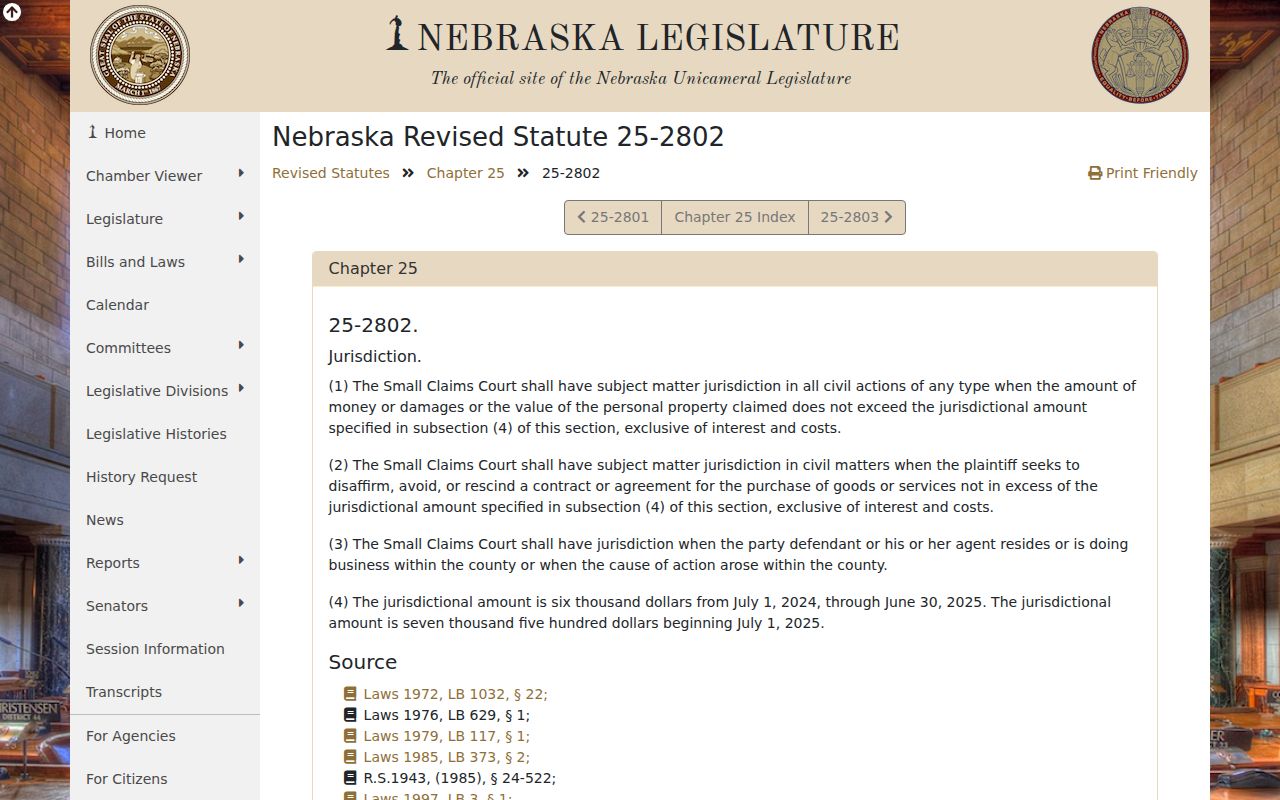
The small-claims statute sets the cap. Court type and subtype remain the practical keys for finding the right Boone docket. The ordinance-prosecution statute is why a Boone municipal complaint belongs on the County Court path.
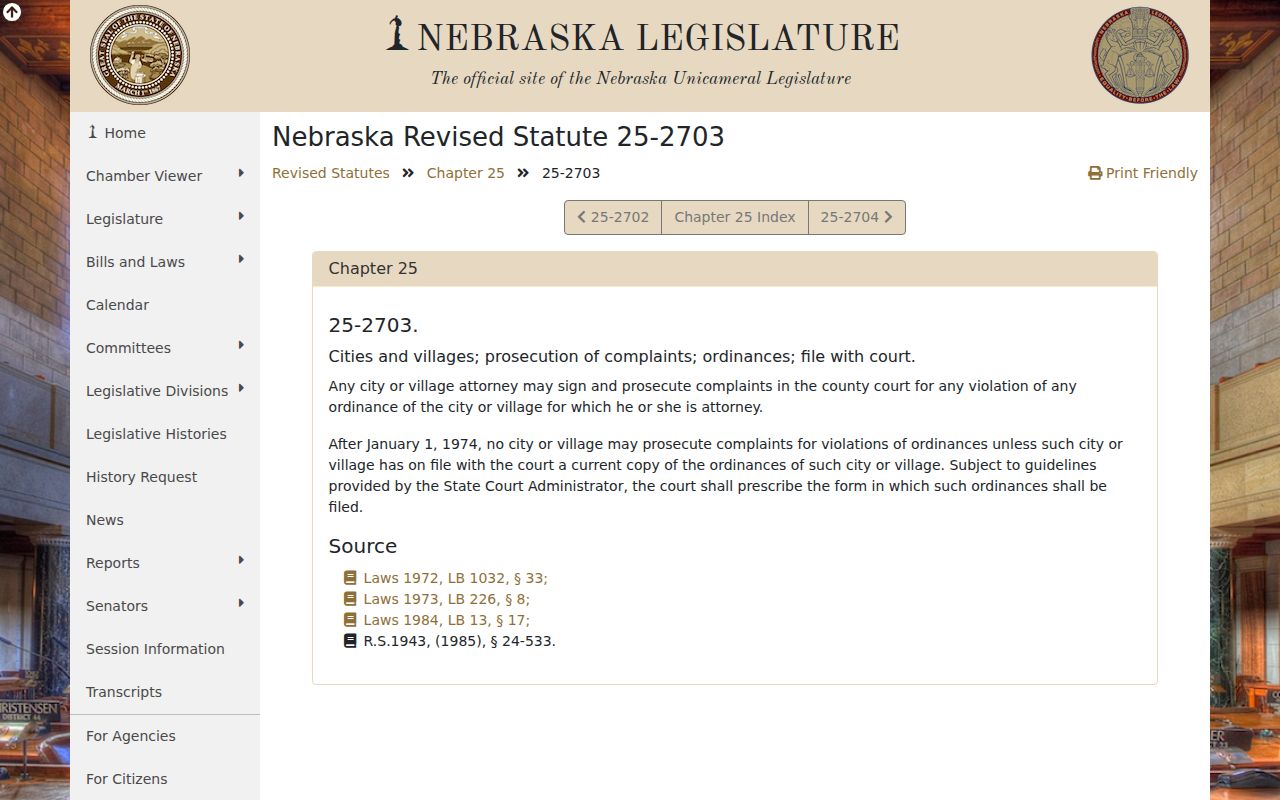
That routing rule saves searchers from hunting a city-only court docket. Boone County Court holds the public case.
Boone Civil Docket Filing Context
FY2025 court reports give useful scale for Boone civil searching, without naming private parties. Boone County Court reported 201 civil cases. It also reported 8 small-claims cases, 33 probate cases, 6 guardianship or conservatorship cases, and 1 adoption case. Boone District Court reported 11 civil cases, 15 domestic-relations cases, and 11 protection-order cases. Those categories cover July 1, 2024 through June 30, 2025. They are annual-report figures. They are not a combined Boone civil-case total, and not a list of outcomes.
The FY2025 County Court report and the matching district report use different court and case-category columns. Keep the figures separate when choosing which Boone docket to search.
Hearings on the Civil Docket
On a Boone civil docket, a hearing is one line in the Register of Actions. It rarely settles the case by itself. Around it you may see a summons return, an answer, a motion, an affidavit, or a conference. You may also see a hearing setting, an order, a trial, a decision, a judgment, or a later satisfaction. A continuance only means the setting moved. It decides nothing on the merits. A calendar listing is handy for date and time. But the current register and the court's latest order give the stronger context for what a setting actually concerns.
Need a current court date? Use the state calendar on its own, then compare it against the Boone case register. An empty calendar response does not prove a hearing never existed. The official calendar itself warns that data entry can lag. A date can be urgent. The court clerk can then give procedural direction for the correct Boone court level.
Note: a civil case can pick up later post-judgment entries. These come after the hearing or trial that first produced the judgment.
Boone Civil Judgment Status
A judgment entry and a satisfaction entry answer different questions. A judgment records a court decision. A satisfaction records payment or fulfillment. The Boone civil register may show financial information, payments, execution, garnishment, or satisfaction, yet it is not a complete account of every outside collection event. Names matter here. For name, debtor, creditor, and satisfaction research, the general index and judgment index are separate tools under the court-records rules.
- Judgment
- The court’s final decision or order resolving all or part of a civil matter.
- Satisfaction
- A record that a judgment has been paid or fulfilled.
- Default judgment
- A judgment entered when a party fails to respond, subject to the court record and rules.
- Execution
- A post-judgment enforcement process that may appear in the register when docketed.
Judgment copies: When a request concerns the actual judgment or its satisfaction, give the clerk the document name and its date. A printed copy of case detail is not clerk authentication.
Who Can See Civil Dockets
Nebraska court rules spell out public electronic fields. Those fields can include case summaries, party information, Registers of Actions, and calendars. They can also include summary judgments, orders, decrees, and available images. Public access does not promise every Boone civil filing is online. Some records are protected by law. Others are redacted, sealed, restricted, not imaged, or still sitting in paper form. A remote case search belongs beside the courthouse terminal. It does not replace local clerk access.
Public-access boundary: Article 8 addresses public electronic court fields, while Neb. Ct. R. §2-215 recognizes public filings subject to restrictions and nonconverted paper records.
Lisa Langan is the listed clerk contact for Boone County Court and Boone District Court, 222 South 4th Street, Albion, NE 68620, 402-395-6184. Ask her office for a register inspection, a non-certified copy, a certified copy, or the correct access route for a restricted filing. Filing fees and copy fees are different things. Call before you pay. The Judicial Branch fee schedule lists the charges for filing with the court. It is not a quote for record copies.
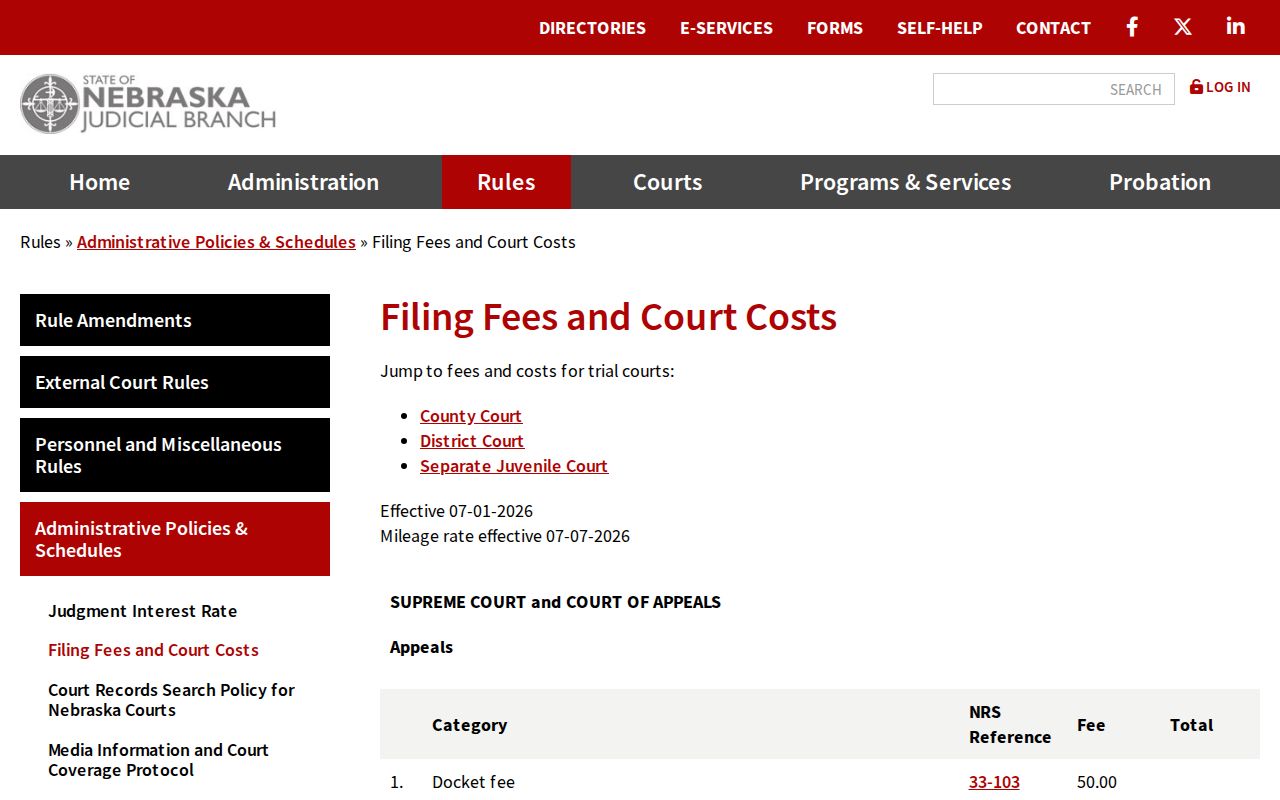
Filing charges are not copy fees. The fees-and-costs schedule helps separate the two, but confirm any current amount with the Boone court clerk before payment.
Boone Civil File Images
A Boone civil Register of Actions can list a filing without showing its text. The entry may name a complaint, petition, answer, motion, order, or judgment. The text itself may not appear. That gap is common. JUSTICE describes public images for filings uploaded after April 16, 2008. Even then, an image may be absent, redacted, restricted, sealed, or never converted from paper. So a Boone case summary cannot prove every filed paper is viewable from afar.
Need the actual document? Name it and give its date. The Boone court clerk can then steer you to the lawful path for a public file copy, a certified copy, or a restricted-record question. Three products, easily confused. An image link, a register entry, and a certified document are not the same thing. Each carries different weight. Keep that distinction straight. A docket entry like "motion filed" will not be mistaken for the full motion or for the court's eventual ruling.